
Sewer laterals in older Orangevale and Fair Oaks homes
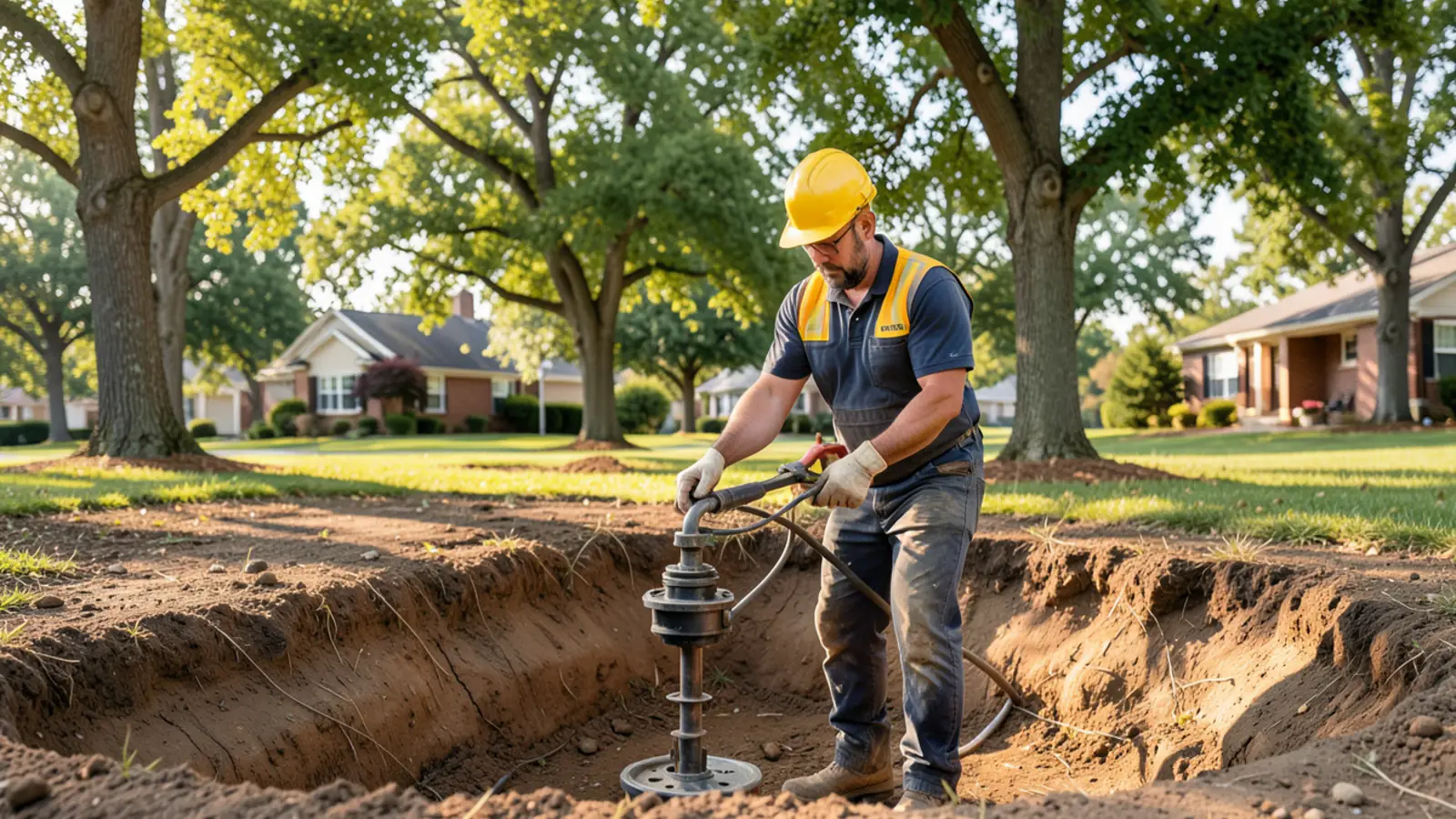
In established neighborhoods across Orangevale, Fair Oaks, and older districts of Folsom, private residential sewer laterals face a relentless underground conflict with aggressive mature tree root systems. Homes constructed between 1945 and 1978 were built using vitrified clay tile or heavy cast iron drain pipes. Over five to seven decades of continuous soil movement and moisture variation, these rigid materials suffer joint dislocations, root penetration, and structural channel erosion. Understanding how tree roots infiltrate older laterals—and how modern trenchless replacement technology permanently restores wastewater flow without destroying mature trees, circular driveways, or custom front masonry—empowers homeowners to prevent catastrophic sewage backups inside their living spaces.
Why Clay and Cast Iron Sewer Laterals Fail
Vitrified clay pipes were installed in short four-foot or five-foot segments connected by mortar, bitumen, or early compression rubber gaskets. As decades pass, ground settling, vehicle traffic over long driveways, and seasonal wetting and drying cycles in Sacramento County clay soils cause mortar collars to crack and crumble. Tree roots from nearby heritage valley oaks, mature pecans, eucalyptus, and liquidambars naturally seek out moisture, drawn to the continuous warm water vapor escaping through microscopic joint fissures. Hair-thin root filaments penetrate the joint collar and rapidly blossom into dense, woody root masses that act as subsurface sieves, catching toilet paper, cooking grease, and solid waste until the line backs up completely.
| Pipe Material | Typical Installation Era | Common Structural Failure Mode | Service Life Expectancy |
|---|---|---|---|
| Vitrified Clay Tile | 1940s – 1975 | Joint cracking, heavy root mass infiltration, shear fractures from ground load | 50 – 60 Years (joints fail much sooner) |
| Cast Iron Soil Pipe | 1950s – 1975 | Bottom-channel rust erosion, scale ridges, hydrogen sulfide crown thinning | 50 – 65 Years |
| Orangeburg (Tar Paper) | 1945 – 1965 | Delamination, ovalization, complete structural crushing under soil load | 30 – 40 Years (all past service life) |
| Seamless HDPE | 1995 – Present | Continuous heat-fused joints, 100% root-proof, flexible ground shift tolerance | 100+ Years |

The Limitations of Repeated Mechanical Rooter Snaking
When a home experiences a sudden sewer backup, calling a rooter service to snake the line with a mechanical rotating steel cable is the traditional emergency remedy. While spinning mechanical blades punch a temporary three-inch hole through the center of the root ball to allow standing water to drain, mechanical cabling does not repair the fractured pipe joint. In fact, severing tree roots triggers a natural biological growth response, stimulating the root system to generate dense secondary root shoots that re-clog the pipe within 60 to 120 days. Pouring copper sulfate crystals or chemical root-killer foams into toilets also proves ineffective over long lateral distances, because the chemicals wash past root balls without penetrating the soil collar where roots originate. Furthermore, spinning steel blades repeatedly strike brittle clay bells and fragile cast iron pipe bottoms, widening existing cracks, knocking out offset joints, and accelerating full pipe collapse.

High-Pressure Hydro-Jetting and Mechanical Descaling Protocols
Before selecting a permanent rehabilitation method, restoring full internal pipe diameter is essential. We deploy trailer-mounted hydro-jetters that propel water through specialized stainless steel rotating nozzles at 3,500 to 4,000 PSI with a high-volume flow of 12 gallons per minute. Rear-facing high-velocity water jets blast tree roots flush against the pipe wall, scour hardened mineral scale, and emulsify congealed kitchen grease. For older cast iron pipes encrusted with heavy iron oxidation flakes, we utilize high-speed mechanical chain-flailing descalers. These spinning carbide chains knock off rust blisters and restore the pipe interior to a smooth, uniform cylindrical profile, preparing the line for high-definition video inspection.

Trenchless Solutions: Pipe Bursting vs. Epoxy CIPP Lining
In acreage parcels across Orangevale and hillside estates in Fair Oaks, private sewer laterals frequently extend 75 to 150 feet from the house cleanout to the street main. Excavating an open trench across this distance would devastate mature shade trees, ruin paved driveways, and destroy custom brick pathways. Modern trenchless plumbing engineering provides two permanent, zero-trench alternatives:
Actionable Inspection Steps
Sacramento County and SASD Permitting and Boundary Rules
In unincorporated Sacramento County communities including Orangevale and Fair Oaks, sanitary sewer infrastructure is overseen by the Sacramento Area Sewer District (SASD). The legal dividing line for repair responsibility is clear: the homeowner is entirely responsible for the private upper sewer lateral running from the home foundation out to the public right-of-way cleanout or property boundary. Replacing an upper lateral requires a formal building permit issued through the Sacramento County Building Permits & Inspection Division. Before trench pits can be backfilled, county code mandates that the newly installed lateral undergo either a ten-foot standing head water pressure test or a continuous high-definition video inspection reviewed and signed off by a county building inspector. Furthermore, SASD regulations require that homes whose lowest plumbing drain outlet sits below the rim of the nearest upstream public sewer manhole must install an approved backwater prevention valve to protect against municipal mainline surcharges during severe winter storms.
Long-Term Protection and Diagnostic Video Verification
Once a seamless HDPE pipe bursting or CIPP lining project is completed, our technicians run a self-leveling 1080p color sewer inspection camera through the entire length of the line out to the SASD public main. We provide homeowners with a digital USB recording showing flawless interior pipe wall smoothness, continuous downward slope, and complete elimination of root intrusion points. This digital video documentation also provides critical proof of unencumbered sewer lateral integrity for future real estate disclosures and home buyer inspections.
Frequently asked questions about this guide
Who is responsible for the sewer lateral between my house and the street in Fair Oaks and Orangevale?
The property owner is financially responsible for maintaining and repairing the private upper sewer lateral from the home's plumbing connection out to the public right-of-way cleanout or street main connection under Sacramento Area Sewer District (SASD) regulations.
Can high-pressure hydro-jetting damage old clay sewer pipes?
When performed by trained technicians with calibrated pressure regulators, hydro-jetting is safe for intact clay pipes. However, if a pipe already suffers from severe structural fractures or missing sections, our plumbers first perform an HD sewer camera survey to verify pipe integrity before running high-pressure nozzles.
How does trenchless pipe bursting work without digging up my front yard?
Pipe bursting requires only two small access pits: one near the house foundation cleanout and one at the street connection. A hydraulic machine pulls a steel bursting head through the old clay line, fracturing it outward while pulling a brand-new seamless HDPE pipe in behind it, leaving your lawn, driveway, and landscaping intact.
Why do tree roots grow back so quickly after a sewer line is snaked?
A standard drain snake only tears a small opening through the middle of the root mass to temporarily restore flow. Because the joint crack remains open and exposed to warm sewer vapor, tree roots experience aggressive secondary vegetative growth, typically blocking the line again within 2 to 4 months.
Does Sacramento County require a two-way cleanout when a sewer lateral is replaced?
Yes. Under Sacramento County Building Permits & Inspection Division codes and SASD requirements, replacing a sewer lateral mandates installing an accessible double two-way cleanout riser near the building footprint or property line to ensure future access for emergency cabling and camera inspections.
Related services and service areas:
Need on-site plumbing diagnostics?
Our licensed Folsom technicians provide upfront written estimates and fast dispatch from Creekside Dr.